

Method 01 — The Serac Method · Sequential, No Exceptions

Five pillars, read in order.

S·E·R·A·C — Space, Emotion, Refinement, Articulation, Curation. The order is the intellectual core of the method: each pillar corrects a predictable failure that appears the moment its stage is skipped.

Hand sketch of a lobby with red seating
Fig 1.0 — The hand moves first. Concept sketch, studio lobby series. Human
Sheet 02 — Working Principle

The hand sketches. The machine develops. The designer decides.

This is the division of labor the entire method is built on — perception, taste and direction stay human; iteration, drafting and exploration get faster.

Hand sketch of a lobby with red seating
Fig 2.0 — The hand: concept sketch, studio lobby series Human
Developed interior render with red seating
Fig 2.1 — The machine: developed exploration, same series Accelerated

Perception → Generation → Judgment — the loop taught in every module

Sheet 03 — The Sequence at a Glance
Scale: sequential Tolerance: none
S
Pillar 01

Space

Read the built environment before interpreting it emotionally — plans, proportion, light, circulation.

E
Pillar 02

Emotion

Listen beyond the stated brief; translate what the client feels into testable mood systems.

R
Pillar 03

Refinement

Generate genuinely different directions, then choose with criteria — not enthusiasm.

A
Pillar 04

Articulation

Materials, verified sourcing and narrative — a language the concept can be built and sold in.

C
Pillar 05

Curation

Edit ruthlessly; audit the workflow; present process as proof of authorship.

Sheet 04 — The Five Pillars in Depth Scroll to walk the sequence
Five pillars.
One unbroken sequence.
SS
Space
01 / 05
Pillar 01 · Week 1

Space

The foundation pillar — reading a room on its own terms before any emotional, conceptual, or material decision enters the picture. You learn the SERAC framework itself, the discipline of sequence, and how to use AI to analyse a floor plan or photographed space for proportion, light quality and circulation — producing a written spatial reading before concept work begins.

⚠ skipped — concepts ignore the architecture they live in

Architecture reading its landscape Week 1 — see the six weeks →
Pillar 02 · Week 2

Emotion

Listening beneath the stated brief. You learn to hear the feeling under a client's literal words, translate it into a structured emotional brief, build a layered mood system — colour, light, texture, spatial reference last — and prototype the atmosphere of a space in language and moving image before a single design decision is made.

⚠ skipped — rooms are beautiful for no one in particular

A sculptural interior composed around feeling Week 2 — see the six weeks →
Pillar 03 · Week 3

Refinement

Generating three genuinely distinct design philosophies — not cosmetic variations — from a single emotional brief, then narrowing them with a six-criterion scorecard in which designer conviction is the one measure AI cannot evaluate. The chosen direction becomes a focused, disciplined concept board.

⚠ skipped — the first pretty render wins

A deliberately distinct design direction Week 3 — see the six weeks →
Pillar 04 · Weeks 4–5

Articulation

Giving the concept a language — twice over. First materials: reading patina, weight, rarity and provenance as vocabulary, with AI-assisted sourcing bound to a mandatory verification checklist. Then presentation: pacing, restraint, a five-act narrative arc, and AI-drafted text hand-edited until the voice is unmistakably yours.

⚠ skipped — the concept can neither be built nor sold

Material and finish study Weeks 4–5 — see the six weeks →
Pillar 05 · Week 6

Curation

The capstone. A full residential brief carried through all five pillars independently, an honest audit of where AI belonged in your workflow — and where it should never have entered — and a final portfolio anchored by a designer's statement written entirely without AI.

⚠ skipped — the portfolio shows output, not a designer
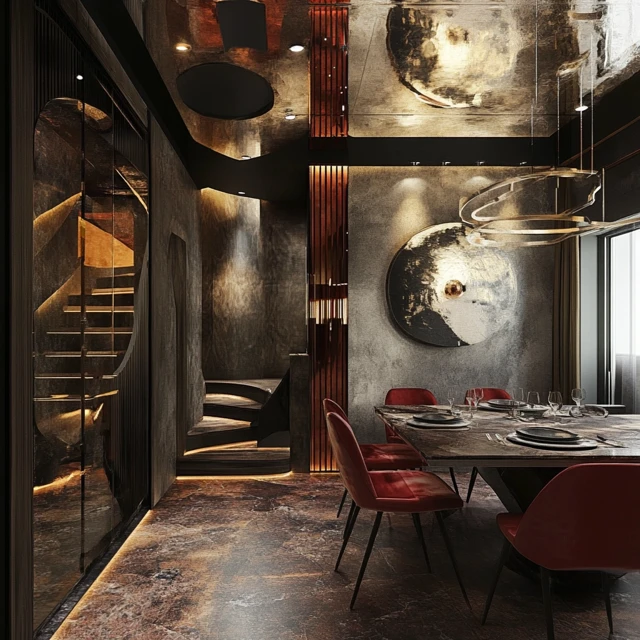
A finished room that holds its argument Week 6 — see the six weeks →
Sheet 05 — Why the Order Is the Method Failure analysis

Skip a stage, and the failure is predictable.

Every shallow AI-assisted project fails the same way — at whichever stage was skipped. The sequence exists because the failures do.

SKIP-S

Skip Space — and the concept ignores the plan it must live in: beautiful rooms that don't fit their architecture.

SKIP-E

Skip Emotion — and the work belongs to no one: a mood pulled from the feed instead of from the client.

SKIP-R

Skip Refinement — and the first pretty render wins by default: variation mistaken for direction.

SKIP-A

Skip Articulation — and the concept can't be built or sold: unverified materials, a narrative that collapses under one good question.

SKIP-C

Skip Curation — and the portfolio shows output instead of authorship: volume where judgment should be.

Panoramic biophilic interior study
Fig 6.0 — Atmosphere is composed, not prompted. Panoramic study. Serac Design Studio
Sheet 06 — Final Issue · Oct 2026

Learn the sequence.

Join the waitlist for early-bird pricing — announced September 2026 — and enrollment details as they are released.

recorded ✓ — you will hear from us first.

Launch news only · no noise